Women's Imagination and Dreams
Women TalkingIn Women Talking, women’s imagination and dreams matter because they allow the women of Molotschna Colony to describe a life their community’s authorities refuse to recognize and to consider a future beyond it. Dreams are not presented simply as private fantasies or as proof of irrationality. They become a language for experiences women have been discouraged from naming, and a way to picture different relations among people. The novel is itself described as both a fictional response to real assaults and an act of female imagination: it makes imagining otherwise part of the response to violence and constraint.
Imagination Against Silence
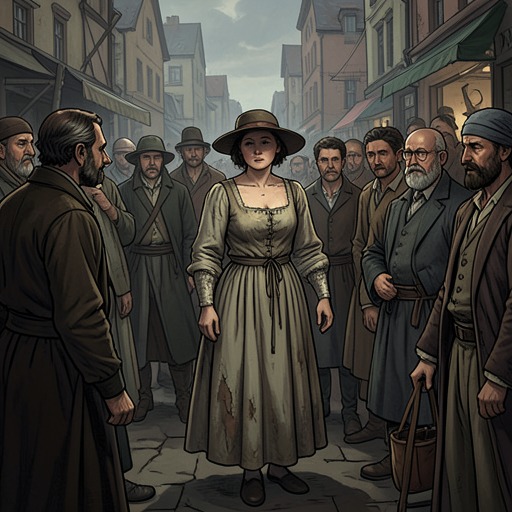
Ona Friesen gives the idea its clearest statement when Mariche Loewen calls her a dreamer. Ona answers that the women have no voice, are out of time and place, and lack even the language of the country where they live. They have no homeland to return to; even the animals of Molotschna Colony are safer at home than the women are. In that account, dreaming is not a dreamy temperament detached from danger. It is what remains available to women who have been denied a secure place, public authority, and a recognized voice.
The women’s circumstances make that claim concrete. The meetings take place in response to years of assaults that had been explained away as supernatural punishment, women’s dishonesty, or imagination. The women wake from unconsciousness without knowing what has happened to them, while male authority figures deny counseling on the ground that they were not conscious during the assaults. Ona turns that reasoning back on itself: if women are told they do not know the world, she asks, does ignorance make them free? Her question exposes how enforced unknowing can be presented as protection while leaving the women without the knowledge needed to understand or contest their condition.
That exclusion also governs religious interpretation. Salome Friesen identifies the problem not as a few gaps in the women’s knowledge but as the male interpretation of the Bible being handed down to them. Ona agrees that being unable to read or write puts women at a disadvantage when negotiating what the Bible means. Imagination therefore develops in a setting where access to written language and interpretive authority is unequal. The women’s capacity to reason and envision is not absent; the social conditions for expressing and validating it have been withheld.
Dreams as Dialogue
Ona’s response to Mariche does not end the disagreement between them. Mariche scoffs at the idea of dreaming and counters with a comic dream of her own, in which people marked by Narfa are not put in charge of revolutionary statements. Ona smiles with genuine appreciation rather than embarrassment. The exchange lets disagreement remain present without reducing either woman to a position in a debate: Mariche’s humor punctures Ona’s lofty phrasing, while Ona’s delighted response makes room for the joke instead of treating it as an attack.
The moment also carries an intimate association for Ona. She smiles as her younger sister Mina, remembered in the colony as Happy Mina, used to smile. That association leads the narrative toward Mina’s death and the community’s competing accounts of it. After Neitje, Mina’s daughter, was assaulted, Peters first attributed the assault to Satan and divine punishment, then said Mina had invented it. Mina challenged the contradiction, and later died by suicide. Peters gave the congregation a different explanation for her death; at the funeral, Ona publicly contradicted it. Recalling Mina makes the women’s struggle over whose account is believed part of the meaning of imagination: a woman’s perception can be dismissed as fantasy even when she is trying to report what happened.
Mariche’s dream and Ona’s smile thus form a small but consequential scene of shared expression. The women do not have to imagine in the same way to recognize one another. Humor can question who is entitled to speak for the group, while affection lets an argument continue without erasing the relationship between its participants. The scene’s imaginative force lies less in supplying a finished vision than in allowing different voices to appear together.
Imagining a Different Community
The women’s dreams acquire practical stakes as the meetings turn toward whether to leave Molotschna Colony. Ona’s pregnancy and Narfa stigma place her in a particularly exposed position: some women hurry to arrange a marriage for her, but she refuses because she believes Julius Penner deserves better and that marrying her would taint him with sin. The elders regard her as beyond redemption and incapable of reasoning. The narrative makes that judgment ironic by showing Ona reasoning about the terms imposed on her, even as other people presume to decide what will happen to her and her unborn child.
Collective imagination also means attending to people whose circumstances complicate a common plan. Salome Friesen asks why boys aged thirteen and fourteen should be excluded if older boys are already with the men and boys twelve and under may accompany the women. She worries that the younger teenagers could be left vulnerable if the accused men return. August Epp answers that adolescents can cause harm but remain children who can be taught, and argues for guidance through firm love and patience. His comparison of the boys to awkward, powerful yearlings registers both risk and possibility; he does not treat their age as proof that they cannot change. The exchange turns a hopeful idea into a difficult question of responsibility and protection.
The proposed future is not guaranteed to include everyone. When Nettie reports that the children are prepared to leave, Greta asks whether Cornelius and his wheelchair are ready. Melvin explains that Cornelius will remain because his mother belongs to the Do Nothing group and he cannot leave without her. The younger women hope that Cornelius and his mother may change their minds, but Mariche says that will not be possible once the men return. The episode limits any easy picture of a universally shared escape: imagining a better community must contend with choices, dependencies, and deadlines that divide the people who might want one.
From Private Vision to Fiction
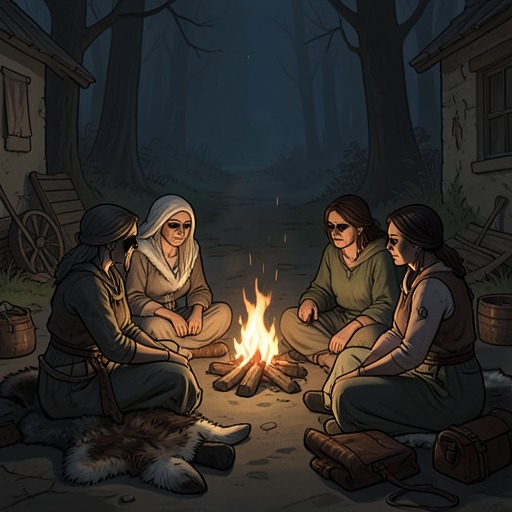
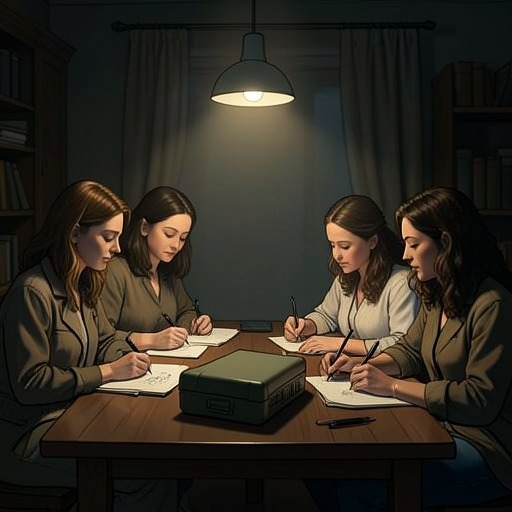
The novel frames its own imaginative act in relation to the real assaults that inspired it. Its fictional meetings allow women to deliberate over what has happened and what they might do, rather than treating their experience as merely an object of outside explanation. That form connects the characters’ struggle to imagine a future with the book’s effort to imagine women reasoning collectively under conditions of enforced silence.
Imagination here does not cancel evidence or make suffering unreal. It helps expose the gap between women’s embodied knowledge and the explanations imposed by others, while opening questions that authority would prefer settled: what women can know, who may interpret scripture, whose account of harm counts, and what kind of community might protect its members. The dreams are consequential precisely because they remain connected to decisions about education, belief, care, and leaving. They are not a promise that every woman can be saved or that a new society will automatically be just. They are the means by which possibilities can be spoken, tested against one another, and made available for collective choice.